
How to Start a Dog Walking Business in the UK (2026): Real Costs, Rules, First Clients


Dog walking is one of the cheapest UK businesses to start: no shop, no stock, no qualifications required by law. But easy entry means real competition — the walkers who earn a full-time living get the rules, insurance and pricing right. This guide gives the real 2026 figures: launch costs, dog laws and council licences, what to charge, and a 30-day plan to land your first paying clients.
The short answer: No specific licence is needed. You do need public liability insurance (from ~£60/year), HMRC self-employed registration (free), and to follow the laws for whoever is in charge of a dog — microchipping and collar-and-tag rules, plus your council’s Public Spaces Protection Order (usually 4 dogs per person, 6 with a professional licence). Most one-person businesses launch for £150–£400 and charge £10–£25 per walk.
Do You Need a Licence to Walk Dogs in the UK?
There is no national licence for dog walkers. The catch is local: growing numbers of councils run professional dog walker licensing or permit schemes under a Public Spaces Protection Order (PSPO).
- Tower Hamlets — licence: 4 dogs per person, up to 6 for holders (insurance, skills and experience required; valid one year).
- Bromley — licence: max 4 dogs, armband displayed, at least £1 million public liability insurance.
- Tandridge — permit for council land: at least £5 million liability insurance, qualifications, risk assessment.
- Maidstone and Leeds — PSPO cap of 4 per person (6 on professional schemes).
Check your council’s website before launching. Where schemes exist, walking unlicensed risks a £100 fixed penalty — up to £1,000 in court. Even without one, four dogs is the sensible ceiling councils’ evidence says one adult can safely control.
The Dog Laws You Must Know
When a dog is in your care, the law treats you as responsible:
| Law | What it means for a dog walker |
|---|---|
| Animal Welfare Act 2006 | Legal duty of care to every animal in your charge. |
| Microchipping rules | Every dog over 8 weeks must be microchipped and on an approved database — confirm with each client; an unchipped dog risks a £500 fine. |
| Control of Dogs Order 1992 | Every dog in public must wear a collar with the owner’s name and address (tag or collar). A chip does not replace the tag. Fines reach £5,000. |
| Dangerous Dogs Act 1991 | Letting a dog be “dangerously out of control” is an offence — your responsibility on every walk. XL Bully dogs are banned in England and Wales. |
| Council PSPOs | Local rules on leads, exclusion zones, dog limits and fouling. Breach: £100 on-the-spot fine, up to £1,000 in court. |
Read GOV.UK’s guidance on controlling your dog in public before your first walk, and consider a pet first-aid course — not legally required, but it is exactly what a worried owner asks about before handing over their keys.
Register Your Business (Free, 10 Minutes)
Almost every dog walking business starts as a sole trader: HMRC registration is free, you keep all the profit, paperwork is minimal. Register by 5 October in your business’s second tax year — ideally before your first client.
A limited company costs £50 online via Companies House and gives limited liability, which matters more once you have staff. For a one-person startup, sole trader is simpler; incorporate later if you grow.
Two money rules: set aside 20–25% of every payment for tax (Income Tax and National Insurance via Self Assessment), and know the VAT registration threshold is £90,000 — few new dog walking businesses reach it in year one.
Insurance: What You Need and What It Costs
No law requires it, but one escaped dog or bitten jogger can cost an uninsured walker tens of thousands of pounds. “Are you insured?” is one of the first questions good clients ask — and some council schemes require cover before licensing you.
| Cover | Typical annual cost (2026) | What it protects |
|---|---|---|
| Public liability, £1–2m | £60–£80 | Injury to the public or damage to property caused by a dog in your care |
| Full policy: PLI + care, custody & control | £90–£120 | Adds cover for injury or loss to the dogs themselves in your care |
| Key cover (add-on) | A few pounds | Replacing clients’ keys and locks if you lose them |
| Employers’ liability | Extra ~£150–£250 | Legally required (minimum £10m) once you employ anyone, even part-time |
Read our guide to business insurance for UK startups for the full breakdown. One practical tip: get written off-lead consent from every owner at sign-up — without it, your insurer may refuse a claim if an off-lead dog causes damage.
Real Startup Costs for 2026
Own a car and decent waterproofs? Launching is remarkably cheap:
| Item | Typical cost (2026) |
|---|---|
| Registering as a sole trader with HMRC | Free |
| Public liability insurance (first year, full cover) | £90–£120 |
| Basic DBS check (builds client trust) | ~£26 |
| Spare leads, long lines, harnesses | £30–£50 |
| Treat pouch, treats, poo bags (starter stock) | £15–£25 |
| Dog towels and a boot liner for the car | £25–£40 |
| Flyers, business cards, simple website | £50–£100 |
| Pet first-aid course (recommended) | Usually under £100 |
| Realistic total to launch | £150–£400 |
Ongoing costs stay small: fuel, consumables, and insurance (paying monthly adds roughly 8–11% versus annually).
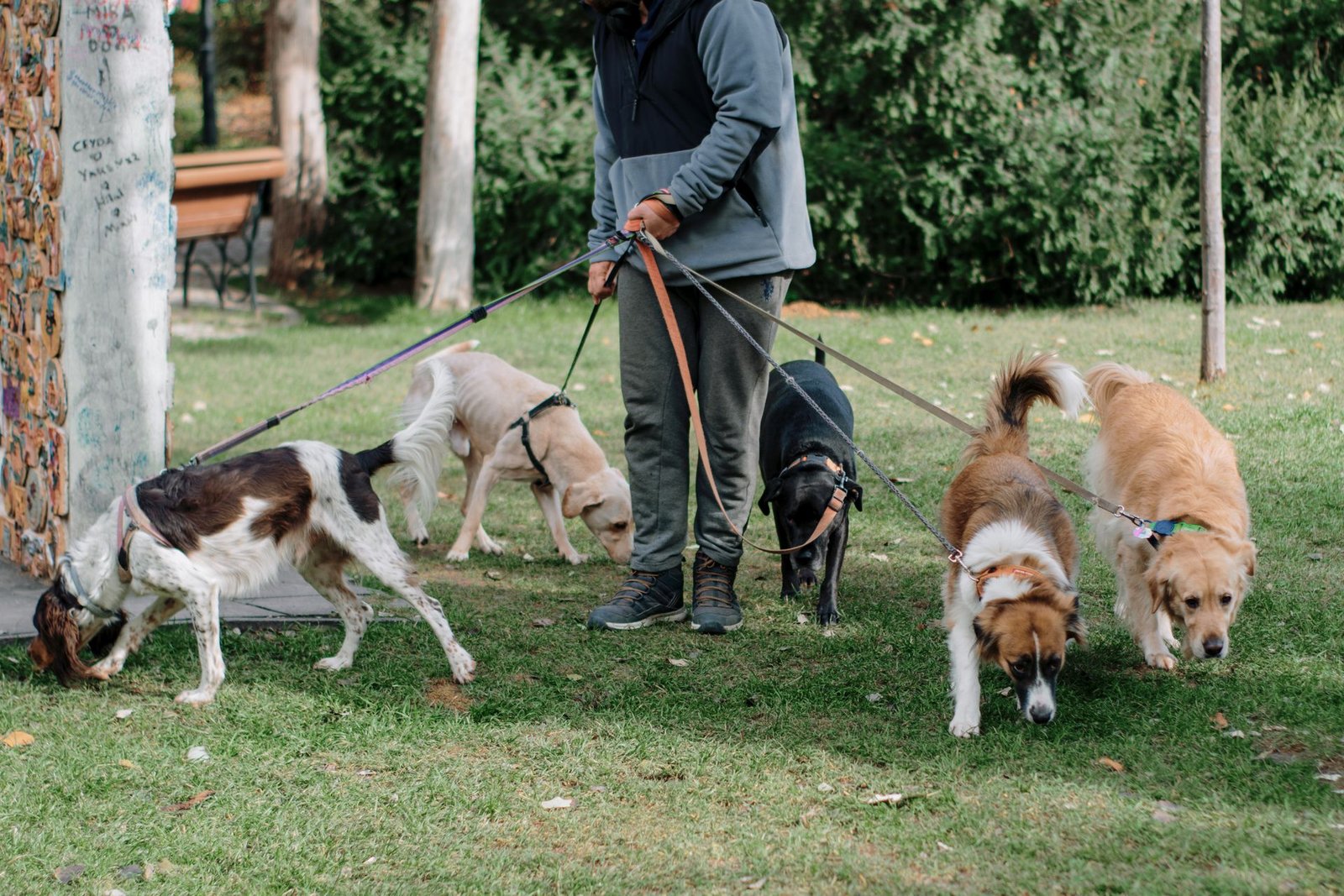
What Should You Charge? (2026 Pricing)
Most new walkers price too low, then cannot raise prices on clients trained to expect cheap. If you are insured and professional, price in the upper half of your local range.
| Service | Typical price (2026) |
|---|---|
| 30-minute group walk | £8–£12 |
| 60-minute group walk (per dog) | £10–£18 |
| 60-minute solo walk | £15–£25 |
| Additional dog, same household | +£4–£8 |
| Puppy visit (20–30 min) | £12–£20 |
Region matters: London runs £20–£30 for a 60-minute group walk, the South East £18–£26, while the Midlands, North, Wales, Scotland and Northern Ireland typically sit at £12–£18. Weekend walks usually carry a £2–£5 surcharge; weekly 5-day packages work out at £200–£400 a month per dog.
Worked example: two group walks a day, five days a week, 4 dogs per walk at £13 each = 4 × £13 × 2 × 5 = £520 per week, roughly £2,250 a month before costs. Minus £150–£250 in fuel, insurance and consumables, a fully booked walker earns a genuine full-time income. Start with group walks for volume; add solo walks for margin.
Your 30-Day First-Clients Plan
Week 1 — Set up. Register as a sole trader, buy insurance, start your DBS check, take a pet first-aid course, and put up a simple website or Facebook business page with services, prices and service area.
Week 2 — Go hyper-local. Dog walking is bought within miles of home: flyer houses with visible dog signs, pin cards at vets and pet shops, and post in local Facebook and Nextdoor groups. Offer an intro deal — first walk free, or 20% off month one for your first 5 clients.
Week 3 — Borrow trust. Ask early clients for Google and Facebook reviews — the biggest converter for local services. Partner with groomers, vets and pet shops for referrals. Join local dog-owner groups and answer questions helpfully before pitching.
Week 4 — Systematise. Move regulars onto weekly or monthly packages, set up simple booking and invoicing, and start a waitlist at 12–15 dogs — scarcity lets you raise prices for newcomers. Aim for 8–10 regular dogs by day 30: a solid part-time income and the base for full-time.
Two habits keep clients for years: send a photo and short report after every walk, and never exceed four dogs per person.
Frequently Asked Questions
Do I need qualifications to start a dog walking business in the UK? No — there is no legal qualification requirement. But clients prefer walkers with pet first-aid training, and a few council permit schemes ask for qualifications. Training is a competitive advantage, not a legal hurdle.
How much can a dog walker earn in the UK? Typically £10–£25 per hour-long walk. A part-timer with 8–10 regular dogs might earn £800–£1,200 a month; a fully booked full-timer can earn £2,000–£2,500+ a month before costs. London and the South East pay most.
How many dogs can I walk at once? No national legal limit, but most council PSPOs cap it at 4 per person (6 with a professional licence where schemes exist). Start with 3–4 and scale up only with experience.
Do I need insurance to walk dogs professionally? Not by law — but in practice, yes. Public liability costs from around £60 a year; care, custody and control cover (£90–£120 a year total) protects you if a dog in your care is injured or lost. Serious clients will ask.
Can I walk dogs part-time alongside my job? Absolutely. You still register as self-employed with HMRC and declare the income via Self Assessment. Under £1,000 a year extra, the trading allowance may cover you; above that, register and file properly.
The Bottom Line
Dog walking is one of the most honest startups there is: cheap to launch, cash-flowing from week one. The walkers who thrive are not the cheapest — they are the insured, reliable, photo-sending professionals owners trust with their keys. Sort the insurance, check your council’s rules, price properly, and work the plan.