
Every business you’ve ever admired started as somebody’s obsession. The candle on your shelf, the sourdough in the café window, the hand-thrown mug in the boutique — each one began as a hobby someone refused to keep to themselves.
And here’s the good news: in the UK, turning a hobby into a business is one of the lowest-risk ways to become your own boss. You already have the skill, you already love the work, and HMRC even gives you a £1,000 tax-free head start. Here’s the whole journey in five practical steps.
The short answer
To turn your hobby into a business in the UK: prove strangers will pay for it, price your work to cover costs plus your time, and start selling small — online or at local markets. If your gross sales stay at £1,000 or less in a tax year, you don’t even need to tell HMRC. Once you pass £1,000, register as self-employed with HMRC by 5 October following the end of that tax year and keep proper records. Most hobby businesses start as sole traders — there’s no need for a limited company on day one.
Step 1: Prove someone will pay for it
Friends telling you “you should sell these!” feels wonderful — and means almost nothing. Friends are biased, and politeness is free. Strangers handing over real money is the only market research that counts.
Set yourself a simple target: sell ten items to people you don’t know. List a few on Etsy or Facebook Marketplace, take a table at a local craft fair, or post in a community group. Ten stranger-sales tells you three things no amount of encouragement can: your product sells, your price works, and you enjoy the selling part (some discover they love making but hate selling).
Notice what sells fastest and what people ask for — your first ten customers double as product developers, and their questions (“do you make these in blue?”) are free business advice.
Step 2: Price it like a business, not a hobby
This is where most hobby businesses quietly die. When you love the work, charging properly can feel greedy — so hobbyists routinely price below cost and call it “just covering materials.” That’s not a business; it’s an expensive hobby with customers.
Use a simple formula instead. Add up: (1) your materials cost per item, (2) your time at a fair hourly rate (never below minimum wage — your evenings are worth real money), and (3) a share of overheads like packaging, postage supplies and market stall fees. Then add a profit margin of at least 20%. Quick check: if your price is less than four times your materials cost, you’re almost certainly undercharging.
Two pricing truths: higher prices often sell better than low ones — bargain prices make handmade goods look cheap, while confident pricing signals quality. And never apologise for your prices: you’re charging for the years it took to get this good, not an hour of your Tuesday evening.
Step 3: Sort the tax and legal basics
This is the part everyone dreads, and it’s far simpler than it looks. Three things matter.
The £1,000 trading allowance
HMRC lets you earn up to £1,000 of gross trading income per tax year without telling them anything — this is called the trading allowance, and it applies automatically. “Gross” means the total customers pay you before any costs come off. So if you sell £800 of candles in a tax year, that’s it: no registration, no tax return, no tax. You should still keep basic records of what you earned, just in case. The full rules are in GOV.UK’s guidance on tax-free allowances for trading income.
When you must register
Once your gross sales pass £1,000 in a tax year, you must register with HMRC for Self Assessment by 5 October following the end of that tax year (the tax year runs 6 April to 5 April). At that point you choose each year between deducting the flat £1,000 allowance or deducting your actual expenses — whichever leaves you with the lower taxable profit. You can’t use both.
Keep it simple and separate
Register as a sole trader — it’s free, takes minutes online, and it’s all most hobby businesses ever need. Keep business money in a separate account or pot, and log every sale and cost in a simple spreadsheet; clean records are your best friend if HMRC ever asks. If you sell at markets, check whether the organiser requires public liability insurance — many do.
One caution: some hobbies carry extra rules. Selling food means registering as a food business with your local council; selling cosmetics means complying with UK cosmetics safety regulations. Check before you sell, not after.
Step 4: Start selling small
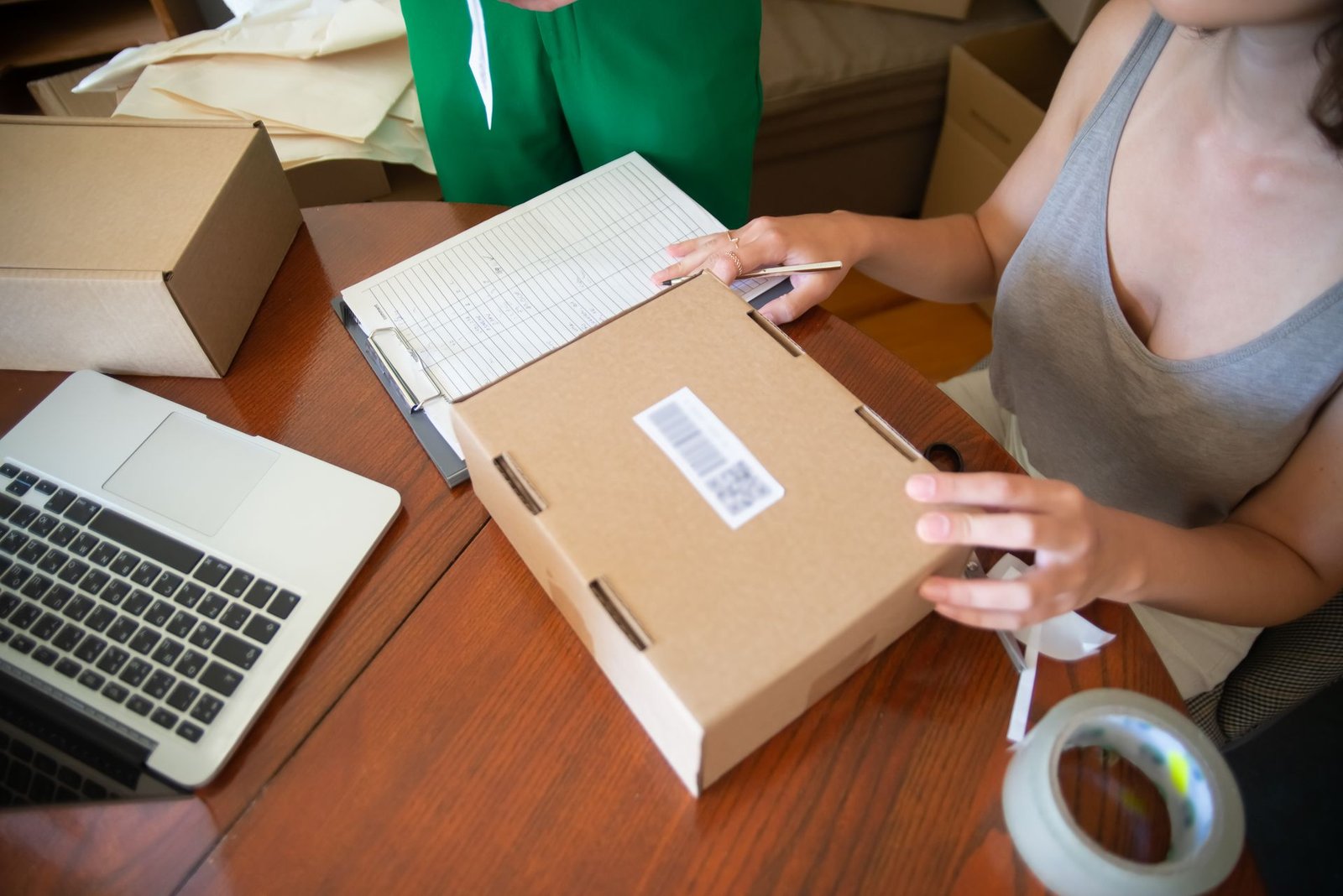
You don’t need a website, a logo, or business cards. You need one sales channel and your first twenty customers. Etsy remains the natural home for handmade goods in the UK; eBay and Vinted work for simpler items; Instagram and TikTok are free shop windows where makers build audiences by showing the process, not just the product.
A Saturday market stall teaches you more in one day than a month online — you watch faces, hear objections, and learn which products people pick up.
Many hobby businesses begin as a side hustle ideas that actually pay alongside a day job, growing evenings and weekends until the income justifies bigger steps.
Step 5: Run it like a business from day one
The difference between a hobby that earns and a business that grows is systems. Set working hours — even three evenings a week — and protect them. Reinvest first profits into better materials or tools, track every penny, and learn to say no: to underpriced custom orders, “exposure” deals, and scope creep.
Think one step ahead, too. When orders outgrow your kitchen table, you’ll face happy problems — raising prices, batching production, maybe a first proper workspace. Businesses that plan for growth handle it; the rest get overwhelmed by it.
When does a hobby officially become a business?
HMRC doesn’t care what you call it — it looks at what you do. Tax inspectors use something called the “badges of trade”: are you selling regularly? Buying materials specifically to make things to sell? Advertising or marketing? Trying to make a profit? The more badges that fit, the more clearly you’re trading.
Practical rule of thumb: selling your old belongings at the occasional car boot sale is not a trade. Running an Etsy shop with regular listings, buying supplies in bulk and promoting on Instagram is. When in doubt, the £1,000 allowance is your bright line — under it, you’re fine either way; over it, register.
Hobby vs hobby-business: the mindset shift
| Hobby | Hobby-business | |
|---|---|---|
| Money | Spends money | Aims to make money |
| Pricing | “Whatever feels fair” | Costs + time + margin |
| Time | Whenever the mood strikes | Scheduled hours |
| Records | None | Every penny tracked |
| Customers | Friends and family | Strangers paying full price |
| Goal | Enjoyment | Enjoyment and profit |
The shift isn’t about loving it less — the best hobby-business owners love it more, because the business funds better tools, better materials, and more time doing what they adore.
5 mistakes that kill hobby businesses
- Pricing too low. The number-one killer. Undercharging doesn’t win loyal customers — it wins bargain hunters who vanish the moment you raise prices. Price properly from sale one.
- Ignoring HMRC. The £1,000 allowance is generous, but once you pass it, registration isn’t optional. Penalties for undeclared income dwarf the tax you’d have paid.
- Branding before selling. A £300 logo before your first sale is backwards. Sell first; pretty branding can wait until revenue pays for it.
- Selling everywhere at once. Etsy, your own site, three markets, Instagram shop — each channel needs feeding. Master one channel before adding the next.
- Working for “exposure.” Freebies for influencers and mates’ rates train the market to devalue your work. Make it a rule: the first discount is the last one you’ll ever give.
Frequently asked questions
Do I need to register my hobby business with HMRC?
If your gross trading income is £1,000 or less in a tax year, generally no — the trading allowance covers you automatically. Once you go over £1,000, you must register for Self Assessment by 5 October following the end of that tax year.
How much money do I need to start?
Most hobby businesses launch with £50–£200 of materials and free channels like Etsy or local markets. The golden rule: sell before you scale — let customer money fund your growth, not your savings.
Should I form a limited company?
Not at the start. A sole trader setup is free, simple, and right for the vast majority of hobby businesses. Consider a limited company later if profits grow substantially or you want the protection of limited liability.
Can I keep my day job while building it?
Absolutely — that’s how most start. Just remember your total income (job plus business) determines your tax band, so watch the combined figure as you grow.
The bottom line
Turning your hobby into a business isn’t a leap — it’s a staircase. Ten sales to strangers, honest pricing, the £1,000 tax rule understood, one sales channel working, and the discipline to treat it like a business. Climb one step at a time and the hobby you love can become the income you keep. Your future customers are already out there; they just haven’t found you yet.