
SEO for Small Businesses Selling Online: Product Pages That Rank and Sell (2026)

Your homepage will not win you most of your Google sales. Your product pages will. When a shopper types “hand-poured soy candle UK” into Google, they want a product they can buy, not a company story. The store with a clear, helpful page for that exact search gets the click.
The short answer: SEO for small businesses selling online means giving every key product its own search phrase, a title that earns the click, a description written for a real buyer, honest photos, and the delivery and returns details shoppers check before paying. Do that well on your bestselling products first, and free Google traffic builds up month by month — without paying for every single click.
This guide zooms in on those selling pages. It pairs with our broader guide to SEO for small business online stores, which covers the whole store.
Why Product Pages Win the Sale
Google ranks specific pages for specific searches. A homepage tries to say everything at once, so it matches nothing exactly. A product page can match one search perfectly: one product, one phrase, one clear buying decision.
Think of a small candle business run from home. Her homepage might rank for her brand name, but only people who already know her search that. Her product page for “lavender soy candle UK” can be found by strangers who want exactly that candle. That is the difference between waiting for customers and being found by them.
Start with your ten bestselling products. Ten strong pages beat two hundred thin pages with copied supplier descriptions every time.
1. Give Each Product One Search Phrase
Pick the phrase a real customer would type, not industry jargon. “Hand-poured soy candle” is a better target than “artisan home fragrance solution”. “Sterling silver birthstone necklace” beats “elegant jewellery piece”.
Put that phrase in the page title, in the first paragraph, and in one subheading — naturally, never stuffed in ten times. And give each phrase to only one page. If three of your products all target “soy candle UK”, they compete with each other and Google cannot tell which one to show. One page per phrase keeps your own pages from fighting each other.
Listen to your customers to find phrases. The questions people email you are often the exact phrases they searched for first.
2. Write a Title That Earns the Click
Your title is what shoppers see in Google, so it does most of the selling before anyone reaches your site. Keep it under 60 characters where you can, put the product and a real detail up front, and add a number or benefit only where it is true.
Compare “Candles | Shop” with “Hand-Poured Soy Candle UK — 30-Hour Burn”. The second tells the shopper what they get and why this shop is worth clicking. Write a matching meta description of around 150 characters: what it is, who it is for, and why it is worth buying.
3. Write a Description a Buyer Can Actually Use
Copied supplier descriptions are the single biggest SEO weakness in small stores. Google has seen that text on fifty other sites, so it has no reason to rank yours above them. Your own words are your advantage — nobody else can write about your product the way you can.
Aim for 150 to 300 words per key product, covering materials, size, use, who it suits, and what is included. For example: “Hand-poured in small batches with soy wax, this lavender candle burns for around 30 hours and comes in a reusable amber glass jar with a wooden lid.”
That paragraph helps the shopper decide, gives Google original text to rank, and answers questions that would otherwise become emails and abandoned baskets.
4. Use Photos That Sell and Help Google
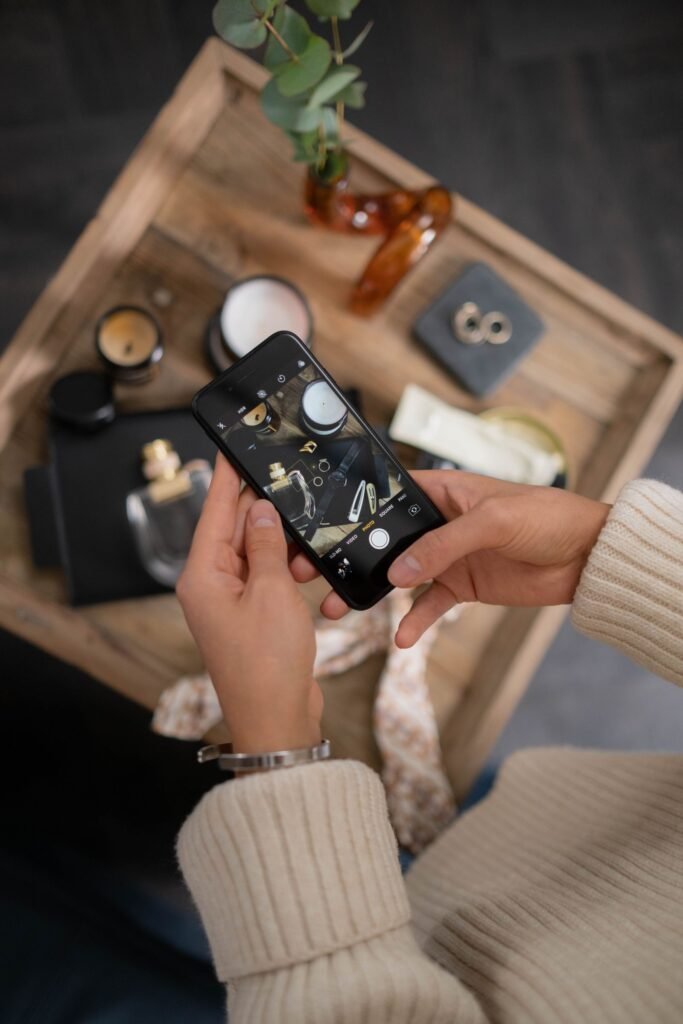
Shoppers cannot pick your product up, so your photos do the job of the shelf, the shop assistant, and the fitting room. Most small stores need three kinds of photo for every key product: a clear packshot on a plain background, a close-up detail shot, and one lifestyle photo showing the product in use.
You do not need a studio. A phone, daylight by a window, and a plain background will produce good photos for most small shops. Before uploading, rename each file properly — “hand-poured-lavender-soy-candle.jpg” instead of “IMG_4821.jpg” — and write alt text that describes the image in plain words. Google reads file names and alt text, and those details help your images appear in Google Images searches. Compress photos before uploading, and test every page on your own phone, since most shopping now happens on mobile.
5. Answer the Details Shoppers Check Before Paying
Many pages lose sales because a simple detail is missing. Put these facts on the product page itself, not just on a separate policy page.
| Detail shoppers check | What to write on the product page |
|---|---|
| Price and delivery cost | The full price, plus delivery cost and timescale, in plain words |
| Returns | How many days they have to return it, and who pays return postage |
| Size and materials | Exact measurements and materials, not vague words like “large” |
| Delivery time | When it will be dispatched, and how long delivery usually takes |
| Personalisation | What can be personalised, and how long personalised orders take |
6. Add Trust Signals Google Can Read
Reviews are the strongest trust signal a small store has. Ask happy customers for a review after delivery, display star ratings on product pages, and reply to questions publicly where other shoppers can see them. You do not need hundreds of reviews to start — ten genuine reviews on your bestsellers already set you apart from a store with none.
Clear delivery, returns, and contact pages matter too. A store that hides its returns policy looks risky to shoppers and Google alike. A short, honest maker story — who you are, where you make things, why you started — builds trust big retailers cannot copy.
7. Link Product Pages Together Sensibly
Internal links tell Google which pages matter and help shoppers find related products. Link each product page to its category page, and link related products to each other where a buyer would genuinely want them — candles with candle care kits, necklaces with matching earrings, dog collars with matching leads.
Use descriptive link text, such as “hand-poured soy candles”, rather than “click here”.
A Worked Example: Before and After
Before: A product page titled “Candle 04 | Shop”, with a copied supplier description of 40 words, one dark photo named “IMG_4821.jpg”, and no delivery or returns information. It ranks for nothing, because Google has seen the same text elsewhere and shoppers cannot tell what they are buying.
After: The same candle, retitled “Hand-Poured Lavender Soy Candle UK — 30-Hour Burn”, with a 200-word description written by its maker, three clear photos with proper file names and alt text, delivery in 2–3 days, and a 30-day returns note on the page. Nothing about the candle itself changed — but now Google can understand it, shoppers can trust it, and it has a real chance of ranking for the phrase its buyers actually search.
That before-and-after is product-page SEO in miniature. It is not fast — new pages usually take weeks to climb — but it is repeatable, and every product you fix stays fixed.
Common Product-Page Mistakes to Avoid
| Mistake | Why it costs you sales |
|---|---|
| Copying supplier descriptions word for word | Google has seen the text before and has no reason to rank your copy |
| One vague title for every product | Shoppers cannot tell products apart in search results, so they click a competitor |
| No size, materials, or delivery details | Shoppers leave to find the answer elsewhere — often on a rival store |
| Huge uncompressed photos | Slow mobile pages lose shoppers before they ever see the price |
| No reviews on the page | New shoppers have no reason to trust an unknown shop with their money |
Google’s SEO Starter Guide explains these foundations from Google’s own side, in plain language.
Frequently Asked Questions
How long does SEO take for a small online store?
Expect weeks before a rewritten page starts climbing, and months before it settles. If anyone promises page-one rankings in days, be wary.
How many words should a product description be?
Around 150 to 300 words is a good target for a key product — enough to cover materials, size, use, and who it suits, without padding.
Do I need different SEO for each product?
Yes: each product needs its own search phrase, title, and description. But the formula stays the same, so after three or four products the rest become much faster.
Can a small shop really outrank big retailers?
For specific, long-tail searches, yes. A big retailer cannot write a detailed, personal page for every niche product. Small shops win by being specific — one exact product, one exact search, one helpful page — rather than chasing broad terms like “candles”.
Conclusion
SEO for small businesses selling online is not about tricks. It is about making each product page clear enough for a stranger to find, understand, and trust in under a minute: one search phrase, a title that earns the click, an honest description, good photos, and delivery and returns answers up front.
Start with your ten bestsellers. Fix one product page a day, and by the end of the month your strongest products will be working for you on Google.