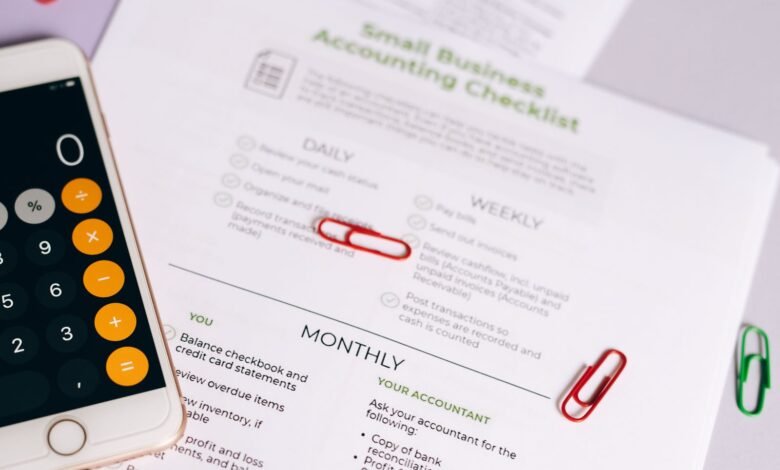
After you register a limited company, nine jobs decide whether your first year runs smoothly or ends in penalties: tell HMRC when you trade, watch for your Corporation Tax number, open a separate bank account, set up bookkeeping, and diary every deadline. Do them in your first few weeks.
Registering the company is the exciting part — the certificate arrives, the name is yours, and it feels official. But Companies House registration alone does not make you tax-ready, and it does not pause any deadlines. New directors most often trip up on the same misunderstanding: they assume one filing covers everything, or that a company which has not traded yet has nothing to do. Neither is true. Companies House and HMRC are separate bodies with separate deadlines, and even a dormant company still has filings to make.
1. Save your certificate and check every detail
When Companies House approves your application, you receive a certificate of incorporation. Save it somewhere safe — your bank, your accountant and sometimes a supplier will ask for it — and check it line by line: the company name, the registered office address, the directors, the share structure and the SIC code describing what the business does.
Also note two dates straight away: your incorporation date and your accounting reference date, the last day of your company’s financial year. Almost every deadline in this guide hangs off one of those two dates, so write them at the top of your checklist. If you have not registered yet, start with our step-by-step guide to register a limited company in the UK and come back here once your certificate arrives.
2. Register for Corporation Tax within 3 months of trading
This is the deadline new directors most often get wrong. You must tell HMRC your company is active within 3 months of starting business activity — not within 3 months of incorporation. The clock starts when you first trade, advertise, buy or sell, employ someone, rent premises or earn business income. Writing a business plan or opening a bank account does not count as starting to trade.
In practice, most companies register online through Companies House and HMRC is notified automatically, but do not assume it happened. Watch for a letter from HMRC containing your company’s 10-digit Unique Taxpayer Reference (UTR), usually posted to your registered office within about 14 days of incorporation. No UTR, no Corporation Tax registration — so if it does not arrive, chase it through GOV.UK rather than waiting.
3. Open a separate business bank account
There is no law that says a limited company must hold a business bank account, but running company money through your personal account is one of the fastest ways to create a mess. It blurs the line between you and the company — the very line limited liability depends on — and it turns bookkeeping into guesswork at year end.
Open the account in the company’s name as soon as you have your certificate and UTR letter, and route every sale, expense and salary payment through it. Approval can take days or weeks, so apply early rather than the week you need to invoice your first client.
4. Set up simple bookkeeping from day one
Good bookkeeping is not a year-end chore; it is a daily habit that takes five minutes when done little and often. Pick a system before the paperwork piles up — a spreadsheet works for a very small company, while accounting software saves real time once invoices grow — and record every transaction as it happens.
You must keep company records for at least 6 years from the end of the financial year they relate to, and HMRC can ask to see them. Keep invoices, receipts, bank statements and contracts together, digitally if you prefer, and photograph paper receipts before they fade.
5. Diary every filing deadline now
This single step prevents most first-year penalties. Put every date below in your calendar the week you register, with a reminder a month before each one:
| What is due | Filed with | Deadline |
|---|---|---|
| First annual accounts | Companies House | 21 months after incorporation |
| Later annual accounts | Companies House | 9 months after your financial year end |
| Confirmation statement (CS01) | Companies House | Within 14 days of the end of each 12-month review period (£50 online) |
| Company Tax Return (CT600) | HMRC | 12 months after the end of your Corporation Tax accounting period |
| Corporation Tax payment | HMRC | 9 months and 1 day after the end of your accounting period |

Note the trap in that table: the tax payment deadline comes before the tax return deadline. Late Companies House accounts bring automatic penalties starting at £150, rising to £1,500, and doubling if you are late two years running.
6. Decide how you will pay yourself — and register correctly
As a director, you cannot simply dip into the company bank account and call it income. The two normal routes are salary and dividends, and they have different registrations. Salary goes through PAYE: you must register as an employer and run payroll before your first payday, even if you are the only person being paid. Dividends, by contrast, are paid from post-tax profits, need no PAYE, but must be declared on your personal Self Assessment tax return.
Many owner-directors use a mix — a small salary plus dividends — but the right mix depends on your income, so this is one decision worth a short conversation with an accountant before your first payment. What you must not do is pay yourself informally and sort the paperwork out later; HMRC treats undocumented withdrawals as director’s loans, which carry their own tax rules.
7. Check VAT, PAYE and other registrations
Corporation Tax is not the only registration to check. Work through this short list and tick off anything that applies to you:
- VAT: you must register if your taxable turnover passes £90,000 in a 12-month period. Below that, voluntary registration is allowed and sometimes pays, because you can reclaim VAT on purchases — but it also adds quarterly returns, so weigh it carefully.
- PAYE: required before you pay any salary, to yourself or anyone else.
- Construction Industry Scheme (CIS): required if your company works as a contractor or subcontractor in construction.
- Licences and insurance: some trades need a licence before trading, and public liability or professional indemnity insurance is a condition of many client contracts.
If none of these apply yet, note the VAT threshold in your diary anyway. Crossing it without registering is one of the most expensive first-year mistakes, because HMRC can backdate the VAT bill.
8. Put contracts and insurance in place before you trade
Before your first client, get the basics in writing: terms of business, a standard contract or engagement letter, and an invoice template showing your company name, registered number and registered office address. Clients and suppliers take a new company more seriously when its paperwork looks established, and a written contract is what protects you if a payment dispute arises.
Insurance belongs in the same week. Public liability cover is the usual starting point, professional indemnity matters if you give advice, and employer’s liability becomes a legal requirement the moment you employ anyone.
9. Keep your public record accurate all year
Your duties do not end with registration. Every year you must file a confirmation statement confirming your company details are correct — directors, shareholders, registered office and people with significant control — within 14 days of the end of your review period, at a cost of £50 online. Even if nothing changed, you still file; silence is not confirmation.
Between filings, update Companies House promptly whenever a director joins or leaves, your registered office changes, or your share structure changes. Most of these updates are free to file online. You must also keep statutory registers — records of directors, shareholders and charges — at your registered office or an alternative inspection address.
Frequently asked questions
Do I need to register for Corporation Tax straight after registering my company?
No — the deadline is 3 months after your company becomes active for Corporation Tax, meaning when it starts trading, not the day Companies House incorporates it. But watch for your UTR letter from HMRC and do not let the 3-month window slip once trading begins.
Do I legally need a business bank account for a limited company?
No, there is no statutory requirement, but it is strongly recommended. A separate account keeps company money apart from your personal money, protects your limited liability in practice, and makes bookkeeping and tax returns far simpler.
When are my first accounts due?
Your first annual accounts are due at Companies House within 21 months of your incorporation date. After that, accounts are due 9 months after each financial year end. Your Corporation Tax return and payment run on separate HMRC deadlines, so diary both sets.
What happens if I register a company and then do nothing?
The company still owes filings. A non-trading company must still file a confirmation statement every year and dormant accounts, and missed deadlines bring automatic penalties. If you no longer want the company, closing it properly is far cheaper than letting it be struck off with penalties attached.
Conclusion
Registering a limited company takes a day; running one well takes a checklist. Work through these nine steps in your first month — Corporation Tax and UTR, bank account, bookkeeping, deadlines, pay, VAT checks, contracts, and an accurate public record — and your first year will be about growing the business, not firefighting filings. For the official picture, see GOV.UK’s limited company formation guidance.